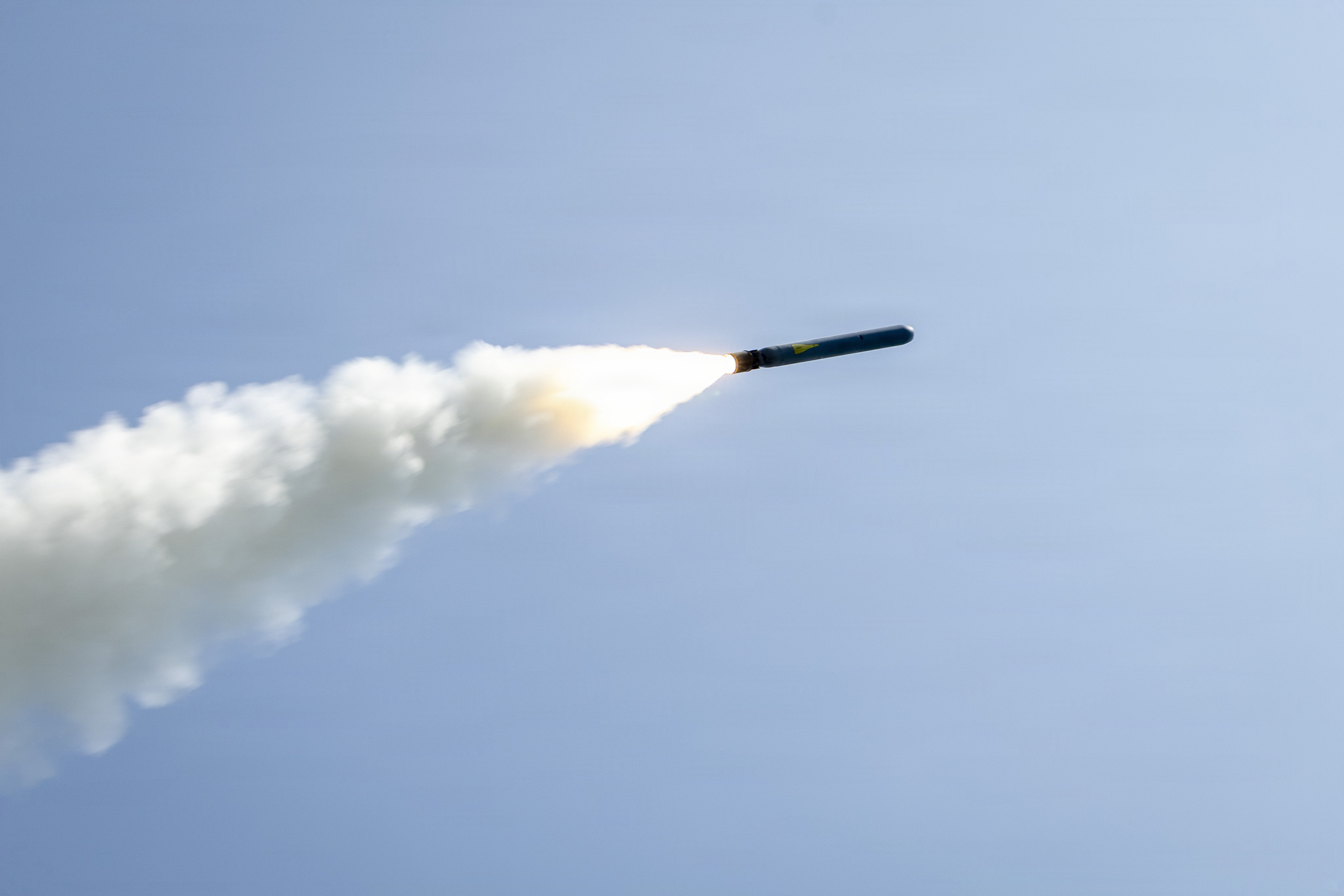
Tomahawk Burn Rate in Iran Exposes Systemic U.S. Munitions Crisis Threatening Multi-Theater Operations
Rapid Tomahawk expenditure in Operation Epic Fury reveals chronic U.S. munitions production shortfalls that could constrain options in a prolonged Iran conflict while undermining deterrence against China, exposing industrial base failures overlooked in initial reporting.
The Washington Post's disclosure that U.S. forces have expended over 850 Tomahawk cruise missiles in the first month of Operation Epic Fury against Iran represents far more than a temporary inventory dip. While the Defense News interview with CSIS's Mark Cancian frames the issue primarily as a concern for Indo-Pacific deterrence, this coverage misses the deeper structural failure: America's defense industrial base remains calibrated for peacetime procurement rather than sustained high-intensity conflict, even in a single theater.
Cancian's assessment that roughly 3,000 Tomahawks remain and that current stocks suffice for Epic Fury underestimates the consumption patterns of a protracted campaign. Iranian forces have demonstrated adaptive dispersal of key assets and rapid regeneration of air defense nodes using mobile systems and decoys, patterns previously observed in Syrian and Lebanese proxy operations. This resilience suggests the early high-volume Tomahawk phase may not conclude as cleanly as reported, forcing continued reliance on expensive sea-launched strikes rather than shifting entirely to cheaper JDAMs once "air superiority" is declared.
Synthesizing the CSIS analysis with a 2023 RAND study on precision munitions sustainment and the 2024 Congressional Commission on the National Defense Strategy, the United States faces production rates of approximately 500 Tomahawks annually against demonstrated wartime demand exceeding 800 per month. This mirrors the 155mm artillery shell crisis triggered by Ukraine aid, where monthly usage outstripped annual manufacturing by a factor of five. The original reporting glosses over these replenishment timelines, focusing instead on the missile's technical attributes while ignoring how Raytheon's constrained supplier ecosystem and lack of multi-shift production lines create irreversible delays.
The strategic implications extend beyond simple math. In a protracted Iran conflict, sustained Tomahawk expenditure directly competes with maritime strike variants needed to deter Chinese amphibious operations against Taiwan. Beijing is closely monitoring these depletion rates, much as it studied U.S. munitions performance during the 1991 Gulf War. Should reserves drop below critical thresholds, Washington may face a harrowing choice: curtail operations against Iranian nuclear infrastructure or weaken its forward posture in the Western Pacific, effectively ceding initiative to adversaries in both theaters.
What the coverage fundamentally missed is the pattern recognition across recent conflicts. From Javelin and Stinger shortages in Ukraine to current THAAD and Patriot pressure in the Middle East, the United States consistently enters fights with inventories sized for short, decisive campaigns rather than the grinding wars of attrition that adversaries now favor. Without urgent expansion of the defense industrial base, including surge capacity contracts and raw material stockpiling, these episodic shortages will become permanent constraints on American power projection.
SENTINEL: U.S. Tomahawk consumption in Iran is accelerating a broader munitions crisis that will force prioritization between Middle East operations and Pacific deterrence, likely emboldening Beijing to test American resolve within the next 18 months.
Sources (3)
- [1]Is the US running out of Tomahawk missiles? Here’s what the experts say(https://www.defensenews.com/news/your-military/2026/04/01/is-the-us-running-out-of-tomahawk-missiles-heres-what-the-experts-say/)
- [2]CSIS Assessment of U.S. Munitions Inventories(https://www.csis.org/analysis/us-munitions-inventories-and-future-conflict)
- [3]RAND: Sustaining Precision Strike in Prolonged Conflict(https://www.rand.org/pubs/research_reports/RRA1897-1.html)