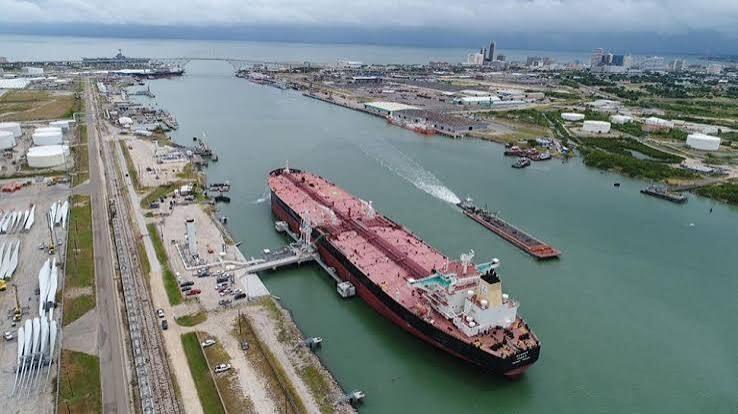
US crude export hub reports hundreds to thousands of cyber probes a day as ports and tankers face a broader wave of attacks
Corpus Christi’s CEO told the Financial Times the largest US crude-export gateway faces hundreds to thousands of cyber probes a day. Los Angeles reported blocking more than 120 million attempts in one month, North Carolina ports confirmed an August disruption, and the FBI and Coast Guard boarded two tankers after network compromises. Full cybersecurity plans under the Coast Guard rule are not due until July 2027, and the rule does not cover foreign-flagged ships.
Documented: Port of Corpus Christi chief executive Kent Britton told the Financial Times that the Texas port, the largest US gateway for crude oil exports at roughly 2.3 million barrels a day, is being probed hundreds or even thousands of times a day. He said the activity comes from “known bad actor” states and organisations, which he did not name, and includes vulnerability scanning plus fraudulent messages impersonating senior executives. A port spokesperson told the FT the facility had not yet suffered a successful breach. The same reporting said the port, which had no dedicated cybersecurity staff four years earlier, was about to hire a fourth cybersecurity employee. Britton’s “about 60 percent of US crude exports” figure, cited in secondary accounts of his remarks, is a claimed share; independent trade data has long put Corpus Christi among the dominant US crude outlets, but current national share fluctuates with Houston and other Gulf loadings.
Documented elsewhere in the same period: Port of Los Angeles executive director Gene Seroka told Bloomberg the nation’s busiest container port blocked more than 120 million cyberattack attempts in August 2026, including intrusion attempts, network exploitation, credential harvesting, and malware. He described the defender’s problem in the same terms port officials have used for years: attackers need to succeed only once. In early August, the North Carolina State Ports Authority confirmed a cyberattack detected around August 4 that disrupted IT systems at the Port of Wilmington, the Port of Morehead City, and the Charlotte Inland Port, forcing delayed openings and manual gate processing before schedules largely resumed within days. The authority did not name an actor or say whether data was stolen.
Also documented: the FBI and US Coast Guard boarded two foreign-flagged oil tankers in the Gulf of Mexico on August 21 and August 24 after indications that both vessels’ networks had been compromised. A joint agency statement said crews cooperated and that there were no reports of operational disruption, vessel instability, danger to crews, or environmental harm. One ship was identified in press reporting as the Liberian-flagged VL Prosperity, bound from Egypt toward Texas. Rear Adm. Amy Grable of Coast Guard Cyber Command told CBS investigators found malicious cyber activity aboard. Claimed, not confirmed by US agencies: Iranian outlet Mehr, citing an unnamed crew member, said hackers interfered with engine and navigation systems and cut communications for about 30 hours. US officials have not publicly attributed the boardings to Iran or any other state.
The regulatory backdrop is also on the record. A Coast Guard final rule on cybersecurity in the marine transportation system took effect in 2025 for US-flagged vessels and MTSA-regulated facilities, with incident reporting and training requirements already in force. Designation of a cybersecurity officer, a cybersecurity assessment, and submission of a cybersecurity plan for Coast Guard approval are not due until July 16, 2027. Coast Guard guidance states the rule does not apply to foreign-flagged vessels—the category boarded in August.
What is documented, then, is sustained probing of a critical energy gateway, a very large volume of blocked attempts at the top container port, at least one confirmed operational disruption at a regional port authority, and two tanker boardings after network compromises, with no public US finding of physical harm. What is claimed is the identity of the attackers and the more dramatic account of what happened aboard VL Prosperity. What is speculated—and not established by these incidents—is that a single successful intrusion would cascade into a national economic or security crisis. Port officials themselves describe an asymmetric problem: defenders must be right continuously; an attacker needs one opening. That asymmetry is a documented operational fact. Whether it becomes a systemic failure remains unproven.
Documented attacks and probes hit the systems that move US crude exports and container cargo, and already forced manual operations at North Carolina ports. Shippers, energy exporters, port workers, and anyone who depends on those flows are the people exposed when a probe succeeds.
Sources (8)
- [1]US ports face cyber attack onslaught as hackers target vital trade routes(https://www.ft.com/content/c269cf3e-2275-4244-9a86-f412c8521b4f)
- [2]US ports face onslaught of cyber attacks(https://thehill.com/policy/technology/6235972-us-ports-ai-cyberattacks/)
- [3]Port of LA Foiled Around 120 Million Cyberattacks Last Month(https://www.bloomberg.com/news/articles/2026-09-17/port-of-la-foiled-around-120-million-cyberattacks-last-month)
- [4]Port of L.A. foiled 120 million cyberattacks in August(https://www.ttnews.com/articles/port-la-cyberattacks-august)
- [5]FBI and Coast Guard boarded US-bound oil tankers over cyberattack concerns(https://apnews.com/article/fbi-suspected-cyberattacks-oil-tankers-coast-guard-5c61bfec835a790e350f06cffc8f8021)
- [6]Cyberattacks on Two Oil Tankers Prompt Coast Guard, FBI to Board Vessels(https://www.securityweek.com/cyberattacks-on-two-oil-tankers-prompt-coast-guard-fbi-to-board-vessels/)
- [7]Securing our ports and vessels with new cybersecurity rules(https://www.mycg.uscg.mil/News/Article/4649110/securing-our-ports-and-vessels-with-new-cybersecurity-rules/)
- [8]Cyberattack delays North Carolina Ports operations(https://dysruptionhub.com/north-carolina-ports-cyberattack-delays/)