Ukrainian Hackers Targeting Roblox Accounts Expose Broader Cybercrime Trends in Gaming Platforms
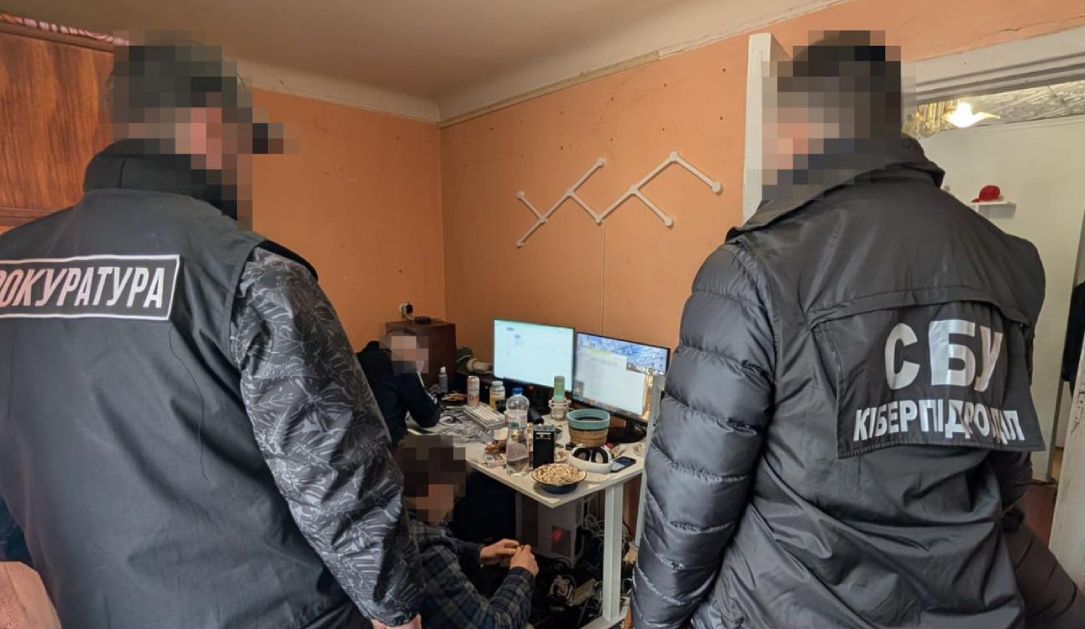
Ukrainian hackers stealing 610,000 Roblox accounts reveal a growing cybercrime trend targeting gaming platforms, driven by the value of virtual assets and weak security. This case, linked to Russian marketplaces, highlights geopolitical gaps and the risk of broader data exploitation, urging stronger protections.
Ukrainian law enforcement's recent detention of hackers accused of stealing over 610,000 Roblox accounts for resale on Russian websites, as reported by The Record, is not merely a isolated cybercrime incident but a window into the expanding nexus of organized crime and digital platforms. The operation, led by a 19-year-old Ukrainian who allegedly developed malware disguised as gaming cheats to harvest user credentials, netted an estimated 10 million hryvnias (about $227,000). While the original coverage focuses on the scale of the theft and the mechanics of the malware, it misses the deeper geopolitical and systemic implications of such activities. This case underscores how gaming platforms, often perceived as low-priority targets, are becoming lucrative arenas for cybercriminals due to the real-world value of virtual assets and the relative lack of robust security protocols compared to financial institutions.
Beyond the immediate crime, this incident reflects a pattern of cybercriminal activity emanating from Eastern Europe, where economic instability and technical expertise often converge to fuel illicit online markets. The use of Russian-registered domains for resale points to a persistent trend of cross-border criminal networks exploiting jurisdictional gaps, a dynamic also seen in ransomware campaigns like those attributed to groups such as REvil, which have historically operated with impunity in the region (source: Krebs on Security). Furthermore, the targeting of gaming platforms aligns with a broader shift in cybercrime towards 'low-hanging fruit'—sectors with high user engagement but underdeveloped cybersecurity. A 2022 report by Akamai noted a 167% increase in web application attacks on gaming platforms, highlighting how these environments are ripe for exploitation due to their young, less security-savvy user base and the monetization of in-game assets (source: Akamai State of the Internet Report).
What the original coverage overlooks is the potential for such schemes to serve as entry points for more sophisticated threats. Stolen credentials from gaming accounts often overlap with personal data used across other platforms, enabling identity theft or further phishing campaigns. This incident also raises questions about the responsibility of platforms like Roblox to protect users, especially minors, who form a significant portion of their demographic. Unlike financial sectors, gaming companies face less regulatory scrutiny for data breaches, a gap that cybercriminals exploit. Additionally, the geopolitical angle—Russian-hosted marketplaces as endpoints for stolen goods—suggests a tacit tolerance or inability to clamp down on such activities, reminiscent of past instances where state actors have been accused of turning a blind eye to cybercrime as long as it targets foreign entities (source: FireEye Threat Intelligence Report on Eastern European Cybercrime).
In the broader context, this case is a microcosm of how digital economies are becoming battlegrounds for organized crime, with gaming platforms as the new frontier. The intersection of cryptocurrency payments and virtual goods creates an almost untraceable revenue stream for criminals, while the social engineering tactics used here—luring users with promises of free bonuses—mirror methods employed in larger-scale scams. As gaming continues to grow as a multi-billion-dollar industry, the lack of international cooperation on cybercrime enforcement, especially in conflict zones like Ukraine, will likely exacerbate these vulnerabilities. This incident should serve as a wake-up call for platform developers, regulators, and law enforcement to prioritize cybersecurity in non-traditional sectors before these breaches escalate into larger systemic threats.
SENTINEL: Expect a rise in cyberattacks on gaming platforms as cybercriminals exploit lax security and high-value digital assets. Without stronger regulations, these incidents could escalate into broader data theft campaigns.
Sources (3)
- [1]Ukrainian Police Detain Hackers Suspected of Stealing Roblox Accounts(https://therecord.media/ukraine-police-detain-hackers-suspected-of-stealing-roblox-accounts)
- [2]Akamai State of the Internet Report 2022(https://www.akamai.com/resources/state-of-the-internet-report)
- [3]Krebs on Security: Eastern European Cybercrime Networks(https://krebsonsecurity.com/tag/eastern-europe-cybercrime/)