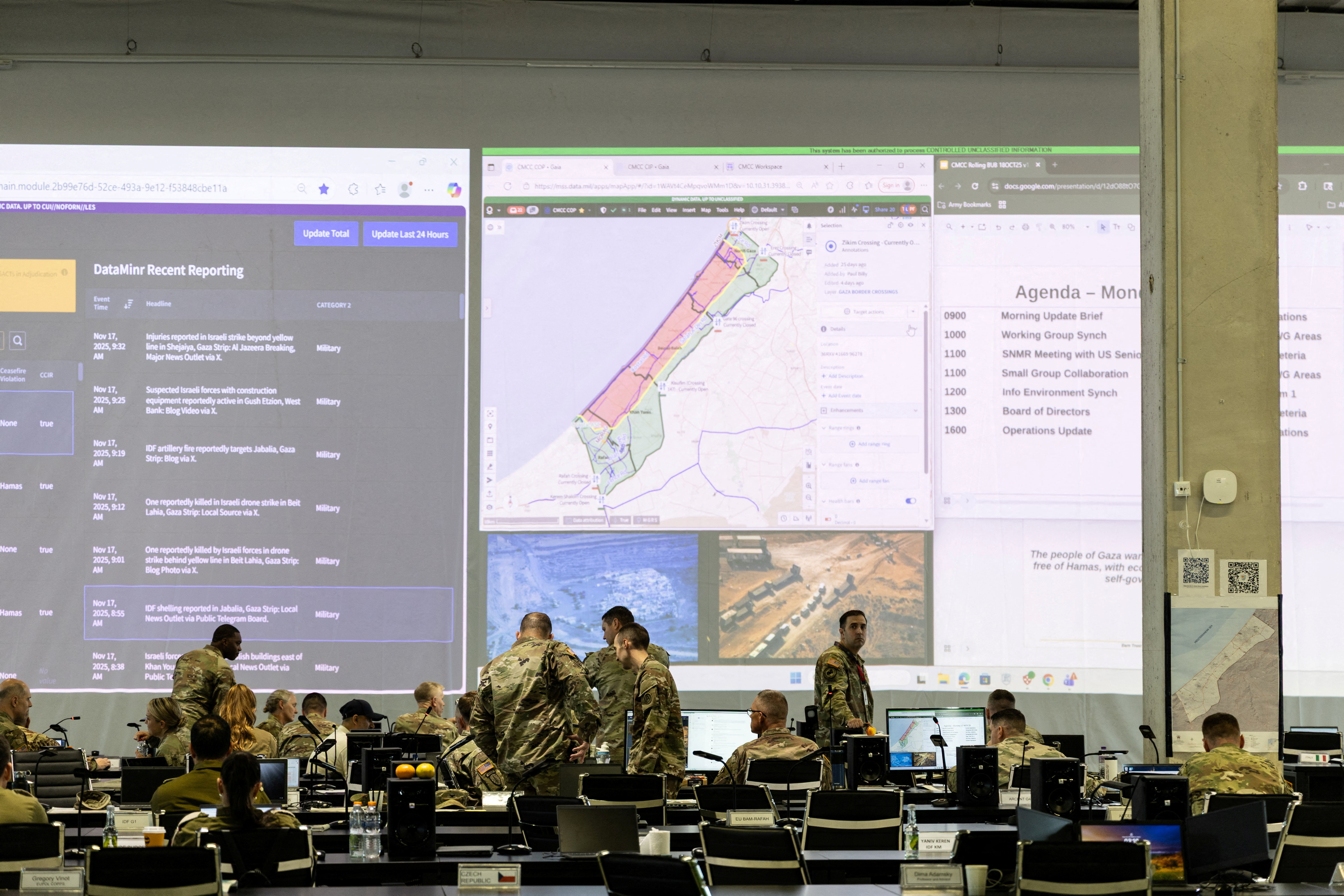
US Closure of Gaza Mission Signals Broader Failure in Middle East Policy Under Trump
The U.S. closure of its Gaza mission (CMCC) highlights the failure of Trump-era Middle East policy, reflecting a loss of influence, humanitarian risks, and strategic missteps. The move to integrate into the ISF lacks credibility, echoing past U.S. errors in Iraq and Syria, while alienating allies and exacerbating Gaza’s aid crisis.
The U.S. decision to shutter its flagship Civil-Military Coordination Center (CMCC) near Gaza, as reported by Reuters, marks not just the collapse of a specific Trump-era initiative but a deeper unraveling of American influence in the Middle East. Ostensibly designed to monitor the Israel-Hamas ceasefire and facilitate aid, the CMCC has been hamstrung by a lack of authority, Israeli military actions, and Hamas’s refusal to disarm. Its integration into the nascent International Stabilization Force (ISF) under the rebranded International Gaza Support Centre, led by U.S. Major General Jasper Jeffers, is less a strategic pivot than a face-saving retreat. This move, which reduces U.S. troop presence from 190 to 40 and shifts reliance to civilian staff from reluctant allies, underscores a recurring pattern in U.S. policy: ambitious plans undermined by misaligned regional realities.
Beyond the immediate story, this closure reflects a broader geopolitical shift. The Trump administration’s Gaza plan, part of a 20-point framework for rebuilding and stabilization, has been stalled by escalating Israeli operations and the U.S.-Israel joint military focus on Iran. This mirrors historical U.S. missteps in the region, such as the post-2003 Iraq reconstruction efforts, where security vacuums and local resistance derailed lofty goals. The CMCC’s failure to enforce ceasefire terms or ensure aid delivery also echoes the ineffectiveness of past U.N.-led observer missions in conflict zones like Lebanon, where political constraints limited impact. What Reuters misses is the strategic cost to U.S. credibility—Washington’s allies, who committed personnel and funds to the CMCC, now face a diplomatic embarrassment as their contributions are sidelined by a U.S.-centric ISF annex with restricted access.
Moreover, the story glosses over the humanitarian fallout. Gaza’s civilian population, already battered by two years of conflict, faces a worsening aid crisis as coordination falters. The CMCC’s dissolution risks further isolating humanitarian efforts, especially as Israel expands territorial control and Hamas entrenches its position. This aligns with patterns seen in Syria, where fragmented international responses exacerbated civilian suffering. A 2025 report by the International Crisis Group highlights that over 80% of Gaza’s aid pipeline depends on U.S.-brokered channels, now in disarray. The ISF’s inability to deploy effectively—lacking troop commitments from key partners—suggests a security vacuum that could empower non-state actors, a risk underscored by a 2024 RAND Corporation analysis of post-conflict stabilization failures.
The deeper issue is the Trump administration’s miscalculation of regional dynamics. By prioritizing a militarized approach over diplomatic consensus, the U.S. has alienated potential partners like Egypt and the UAE, whose roles in Gaza’s future are critical but underutilized. This fits a pattern of unilateralism seen in Trump’s withdrawal from the Iran nuclear deal, which similarly destabilized regional alliances. The closure of the CMCC isn’t just a tactical retreat; it’s a signal that U.S. policy in the Middle East remains reactive, shortsighted, and disconnected from the ground truth—leaving both security and humanitarian objectives in limbo.
SENTINEL: The closure of the CMCC risks a security vacuum in Gaza, likely empowering Hamas or other non-state actors as the ISF struggles to deploy. Expect increased regional instability and a further erosion of U.S. diplomatic leverage.
Sources (3)
- [1]US to close its flagship Gaza mission as Trump plan stalls(https://www.defensenews.com/news/your-military/2026/05/01/us-to-close-its-flagship-gaza-mission-as-trump-plan-stalls/)
- [2]International Crisis Group: Gaza Humanitarian Update 2025(https://www.crisisgroup.org/middle-east-north-africa/eastern-mediterranean/israelpalestine/gaza-humanitarian-update-2025)
- [3]RAND Corporation: Lessons from Post-Conflict Stabilization(https://www.rand.org/pubs/research_reports/RR2024.html)