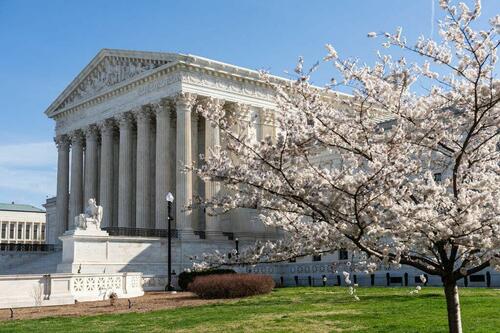
Supreme Court’s Louisiana Ruling: A Seismic Shift Toward Colorblind Maps or Republican Entrenchment?
The Supreme Court's 6-3 ruling in Louisiana v. Callais sharply limits race-based districting under the Voting Rights Act, updating the Gingles framework to require race-neutral maps, separate race from partisanship, and prioritize current discrimination evidence. This major election law shift is poised to protect and expand Republican House advantages in upcoming cycles while exposing how gerrymandering and racial quotas have distorted democratic representation for decades.
On April 29, 2026, the U.S. Supreme Court issued a 6-3 decision in Louisiana v. Callais, striking down the state's congressional map featuring a second majority-Black district as an unconstitutional racial gerrymander. Justice Samuel Alito's majority opinion holds that Section 2 of the Voting Rights Act did not require Louisiana to draw the additional district, meaning no compelling interest justified the predominant use of race in mapmaking. This resets key aspects of the framework established in Thornburg v. Gingles (1986), requiring plaintiffs' illustrative maps to be race-neutral and fully respect traditional districting criteria plus the state's partisan objectives, demanding disentanglement of race from party in proving bloc voting, and shifting focus to evidence of current intentional discrimination rather than historical patterns.[1][2]
While mainstream coverage frames this as a technical adjustment to redistricting law, a deeper heterodox analysis reveals it as a profound exposure of structural flaws in American 'democracy.' For decades, the VRA has effectively mandated race-conscious districting that packs minority voters into specific seats, often aligning with Democratic strongholds while allowing Republicans to dominate surrounding districts. By curbing this, the ruling may prevent the creation or maintenance of numerous majority-minority districts across Southern states, potentially securing GOP House majorities through the 2026 midterms and into the next decade.[3][4] This entrenches partisan advantage not through overt voter suppression but by rejecting the prior regime of engineered racial outcomes.
Connections others miss: This decision intersects with a broader philosophical crisis in representative government. Electoral maps have long been the hidden hand shaping 'the will of the people'—both parties gerrymander ruthlessly for partisan gain, yet layering explicit racial proportionality atop this creates a system where group identity trumps individual equality, echoing critiques of factionalism from the Founding era. The ruling aligns Section 2 more closely with the Fourteenth and Fifteenth Amendments' bar on intentional racial discrimination, reviving colorblind constitutionalism against decades of 'societal effects' and historical remediation arguments. Yet it also underscores how fragile democratic legitimacy is when outcomes hinge on nine unelected justices arbitrating cartography rather than organic voter coalitions. In a polarized republic, this could accelerate disillusionment, as voters recognize maps as predictive of results more than campaigns or ideas. Fringe observers have long argued the post-1965 voting framework masked elite management of demographics; today's opinion peels back that layer, forcing a rawer contest that may favor whichever side better mobilizes without racial carve-outs.[5][6]
Civil rights groups decry it as gutting minority political power, while constitutional originalists hail it as ending a 'disastrous misadventure' in race-based representation. The practical upshot: fewer guaranteed Black and Hispanic opportunity districts, likely flipping several competitive seats toward Republicans. This isn't mere legal housekeeping—it's a mirror held to the contradictions of identity-driven democracy in a nominally individualist republic.
LIMINAL: This ruling likely locks in GOP House control through 2030 by dismantling race-based opportunity districts in key states, exposing democratic processes as map-driven theater rather than pure popular sovereignty and accelerating a shift toward explicitly partisan battles over veiled racial engineering.
Sources (5)
- [1]In major Voting Rights Act case, Supreme Court strikes down redistricting map challenged as racially discriminatory(https://www.scotusblog.com/2026/04/in-major-voting-rights-act-case-supreme-court-strikes-down-redistricting-map-challenged-as-racia/)
- [2]Supreme Court limits Voting Rights Act(https://www.politico.com/news/2026/04/29/supreme-court-voting-rights-act-louisiana-00898123)
- [3]Supreme Court Curbs Use of Race in Drawing Voting Districts(https://www.bloomberg.com/news/articles/2026-04-29/supreme-court-curbs-use-of-race-in-drawing-voting-districts)
- [4]Supreme Court Curbs Protections for Minority Voters in Election Maps(https://www.wsj.com/us-news/law/supreme-court-curbs-states-use-of-race-to-draw-congressional-maps-7a42ebfc)
- [5]Louisiana v. Callais, 608 U.S. ___ (2026)(https://www.supremecourt.gov/opinions/25pdf/24-109_21o3.pdf)