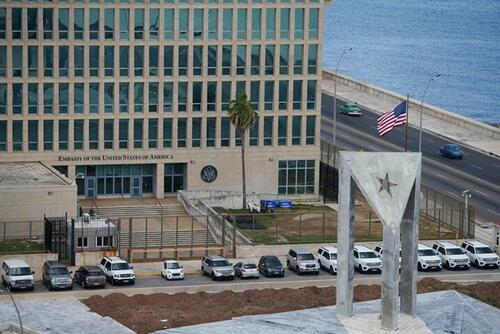
Chinese Cyber Espionage on Cuban Embassy in DC Reveals Escalating US-China Digital Shadow War
Chinese state-linked hackers breached Cuba's Washington embassy, accessing 68 diplomats' emails via old Exchange vulnerabilities amid Trump-era blockade threats and energy sanctions on Cuba. The Gambit Security findings, corroborated across outlets, expose how cyber espionage amplifies U.S.-China geopolitical rivalries in the Caribbean, with both sides accusing the other of hybrid warfare tactics while even allies surveil one another.
Recent findings from cybersecurity firm Gambit Security, first reported by Bloomberg, detail how Chinese state-sponsored hackers breached Cuba's embassy in Washington, D.C., beginning in January 2026. The operation compromised the email accounts of 68 Cuban officials, including the ambassador and deputy chief of mission, by exploiting five-year-old vulnerabilities in outdated Microsoft Exchange servers. Attackers exfiltrated entire inboxes belonging to political and intelligence personnel.[1][2]
This incident unfolded against a backdrop of renewed geopolitical friction: the Trump administration's threats of a naval blockade on Cuba, a decision to halt oil deliveries contributing to nationwide blackouts, and a recent U.S. raid in Venezuela. These moves echo Cold War-era tensions, where Cuba served as a strategic outpost just 90 miles from Florida. The timing suggests the cyber operation was designed to gather real-time intelligence on Cuban responses to U.S. pressure.[1]
Beyond the immediate breach, this event underscores deeper, often underreported dynamics in U.S.-China cyber rivalries. While U.S. officials, including House Intelligence Committee members, have long warned of China's expanding signals intelligence facilities in Cuba and its 'poisonous alliance' threatening Western Hemisphere security, the hacking of an allied embassy in the heart of Washington reveals Beijing's willingness to spy even on partners to protect its interests. Reports frame this as China mirroring tactics it accuses the U.S. of employing globally.[3]
Connections missed in surface coverage include the implications for diplomatic infrastructure worldwide: embassies using legacy systems remain prime targets in hybrid conflicts where cyber operations complement physical blockades and economic coercion. This fits a pattern of escalating digital surveillance that blurs lines between ally and adversary, potentially disrupting intelligence flows between Havana and Beijing while giving Washington insights into both nations' communications. CSIS analyses and congressional statements highlight how such activities compound risks to U.S. national security, especially as China expands influence in Latin America. Pro-Beijing voices counter that U.S. sanctions and covert actions necessitate robust defensive espionage.
The breach highlights a critical vulnerability—outdated embassy IT infrastructure—and signals a new phase of great-power competition where cyber intrusions precede or parallel kinetic threats. As tensions over Cuba's alignment intensify, expect accelerated investments in secure communications and counter-espionage across diplomatic channels.
Liminal Analyst: Cyber intrusions like this will normalize embassy hacking as standard statecraft, pushing vulnerable nations toward rapid IT modernization while accelerating a shadow digital arms race in America's backyard.
Sources (3)
- [1]Chinese Hackers Spied On Cuban Embassy As US Prepared Blockade(https://www.bloomberg.com/news/articles/2026-04-29/chinese-hackers-spied-on-cuban-embassy-as-us-prepared-blockade)
- [2]Chinese hackers spied on Cuban embassy as U.S. prepared blockade(https://www.japantimes.co.jp/news/2026/04/30/world/politics/chinese-hackers-cuban-embassy-us-blockade/)
- [3]Spying on Its Own Ally: Chinese Hackers Accessed Secret Emails at the Cuban Embassy in the US(https://www.ibtimes.co.uk/chinese-hackers-breach-cuban-embassy-washington-1794399)