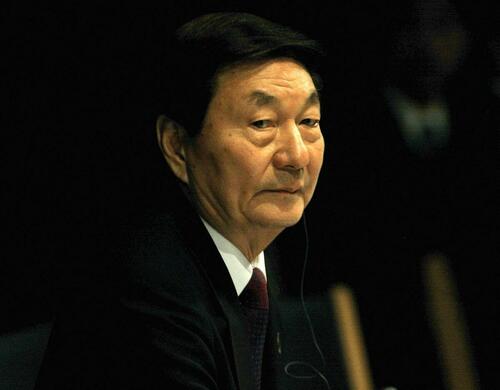
Zhu Rongji's 1994 Tax Centralization Now Fuels Property Crisis as Xi Reverses Market Reforms
Zhu Rongji's fiscal centralization created enduring local revenue shortfalls now driving China's property crisis. Xi's reversal prioritizes state control over the market mechanisms Zhu installed. The shift raises global costs for engaging with Chinese supply chains and capital markets.
The 1994 tax reform shifted 75 percent of revenue to the center while leaving expenditure burdens with provinces, compelling local governments to rely on land-use rights sales. This produced the land-finance model now strained by housing market contraction and local government financing vehicles carrying over 60 trillion RMB in hidden liabilities. Primary fiscal data from the Ministry of Finance show central revenue share rising from 22 percent in 1993 to 55 percent by 2002, locking in the structural dependence. Zhu's WTO accession preparations included closing or merging 60,000 state firms and laying off 35 million workers between 1998 and 2003, per State Council records. Current policy under Xi has halted further SOE privatization and reasserted party committees in private firms, reversing the efficiency gains. The result is slower productivity growth, with total factor productivity declining after 2010 according to Penn World Table data. Hong Kong's role as an offshore financial node has contracted under national security legislation and capital controls, with IPO fundraising falling 80 percent from 2020 peaks. This undercuts Zhu's earlier stabilization measures during the 1997 Asian crisis. Centralization now prioritizes political control over fiscal flexibility, raising borrowing costs for Chinese entities in global markets. Next steps hinge on whether Beijing absorbs local debt through central bonds or maintains austerity on provinces; either path alters the incentive structure for investment and export competitiveness through 2026.
Ministry of Finance: Central government bond issuance for local debt relief will exceed 2 trillion RMB in 2025 if property sales remain below 2021 levels.
Sources (3)
- [1]Ministry of Finance of the PRC Annual Fiscal Reports 1993-2003(http://www.mof.gov.cn)
- [2]WTO Working Party Report on China's Accession WT/ACC/CHN/49(https://docs.wto.org)
- [3]Penn World Table 10.0 Total Factor Productivity Series for China(https://www.rug.nl/ggdc/productivity/pwt/)