AERIS-10 Open-Source Phased Array Radar: Proliferation Risks, Regulatory Gaps, and the Democratization of Electronic Warfare Capabilities
The AERIS-10 open-source 10.5 GHz phased-array radar, capable of 20km multi-target tracking, democratizes dual-use military technology but introduces severe proliferation risks to electronic warfare, counter-drone systems, and great-power tech edges while exposing gaps in FCC/ITAR enforcement and classification policy.
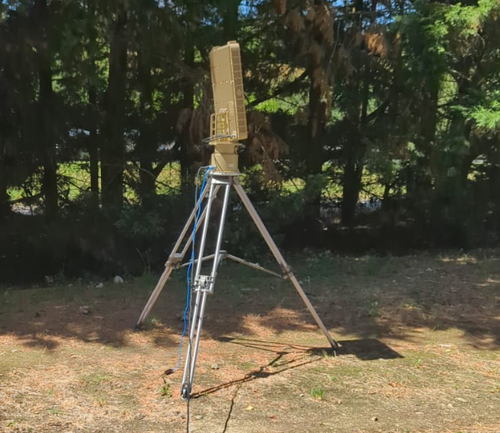
The recent release of the AERIS-10 project on GitHub marks a significant milestone in the accessibility of advanced radar technology. Developed by an individual contributor, this 10.5 GHz phased-array system uses Pulse Linear Frequency Modulated (LFM) modulation and is available in variants capable of tracking multiple targets at ranges of 3 km or up to 20 km. It incorporates beamforming, pulse compression, Doppler processing, and target tracking features traditionally associated with expensive defense contractor systems costing upwards of $250,000. Full design files, including schematics, PCB layouts, Gerber files, FPGA code, firmware, and a Python-based GUI, have been openly published under permissive licenses.
While framed as a tool for researchers, drone developers, and SDR enthusiasts, the project's implications extend far beyond hobbyist experimentation. Open-sourcing detailed military radar designs represents a massive proliferation risk. Phased-array technology is central to modern electronic warfare (EW), counter-drone systems, and integrated air defense. Cheap, hackable multi-target tracking radars could enable non-state actors, smaller nations, or adversarial states to rapidly enhance drone swarm detection, evasion tactics, or even offensive sensing capabilities without massive R&D budgets. This shift mirrors the transformation seen in Ukraine, where open-source and commercial dual-use components have reshaped battlefield dynamics in FPV drones and electronic countermeasures.
Connections to great-power competition are particularly concerning. As the United States and allies invest in next-generation defense primes and "war unicorns," foundational sensing IP is now diffusing globally via platforms like GitHub. Adversaries such as China, with its robust domestic electronics manufacturing, could accelerate iteration on these designs, bypassing traditional export controls. The project originates from a developer outside traditional Western defense ecosystems, highlighting enforcement gaps: once published publicly, technical data can evade ITAR/EAR restrictions, as open-source publications are often considered "published" and not subject to the same controls if no restrictions on further dissemination apply.
Regulatory oversight appears lagging. The 10.0-10.5 GHz band is primarily allocated for Federal radiolocation with strict limits on non-Federal use. Pulsed emissions are heavily restricted under FCC and NTIA rules, with prohibitions on most pulsed operations except specific cases like meteorological radars. Comments on technical coverage of the project have raised questions about FCC enforcement, potential interference, and whether operators could legally deploy such systems in many jurisdictions without experimental licenses. This exposes serious gaps in classification enforcement—much of the underlying technology was never formally classified as secret but holds clear military utility, allowing it to slip into the civilian domain.
Historical context from DARPA's early phased-array programs underscores how such technology was once the exclusive domain of state-funded innovation for ballistic missile defense and space surveillance. Today, a single developer has made equivalent core capabilities accessible for a fraction of the cost, using commercial FPGAs and modular hardware. This dual-use diffusion challenges assumptions about technological superiority in great-power competition, potentially reshaping drone defense postures worldwide. While innovation is accelerated, the security externalities—ranging from asymmetric EW advantages to heightened risks in contested electromagnetic spectra—demand urgent policy attention beyond dismissive regulatory notices.
LIMINAL: Widespread adoption and iteration on designs like AERIS-10 will erode traditional barriers to entry in radar-enabled EW and drone defense, enabling rapid capability diffusion to adversaries and non-state actors that outpaces slow government classification and regulatory responses.
Sources (5)
- [1]AERIS-10 open-source hardware radar can track multiple objects up to 20km away(https://www.cnx-software.com/2026/03/15/aeris-10-open-source-hardware-radar-can-track-multiple-objects-up-to-20km-away/)
- [2]Open Source Radar Has Up To 20 KM Range(https://hackaday.com/2026/03/12/open-source-radar-has-up-to-20-km-range/)
- [3]Understanding US export controls with open source projects(https://www.linuxfoundation.org/resources/publications/understanding-us-export-controls-with-open-source-projects)
- [4]Band Uses (10 - 10.5 GHz)(https://www.spectrumwiki.com/wiki/display.aspx?From=disp&f=10000000001)
- [5]Phased array radar(https://www.darpa.mil/about/innovation-timeline/phased-array-radar)