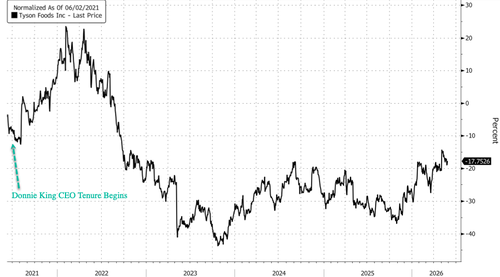
Tyson's CEO Shakeup Signals Persistent Beef Margin Collapse and Soaring Grocery Prices Through 2026
Tyson's CEO exit amid record beef losses from historic cattle shortages will translate to grocery beef prices remaining near $9+/lb through 2026 and beyond, punching bigger holes in household food budgets like a butcher knife through shrinking meat counters.
Tyson Foods' announcement that veteran CEO Donnie King will step down in October 2026, with board member and former P&G executive Jeff Schomburger taking over, comes as the company's beef segment hemorrhages cash amid the worst cattle supply conditions in generations.[1][2] In fiscal 2025, Tyson's beef business posted adjusted operating losses of $426 million, with another $400-600 million in red ink projected for 2026 as domestic beef production declines another 2%. This "bloodbath" stems from a 70-year low in the U.S. cattle herd, triggered by years of drought that forced ranchers to liquidate breeding stock, resulting in sky-high cattle prices that crush packer margins while record retail beef prices (surpassing $9 per pound) dampen consumer demand.[3] Shoppers have shifted toward cheaper chicken, where Tyson saw volume gains as beef volumes and prices softened. In response, Tyson is permanently closing its Lexington, Nebraska beef plant — representing nearly 5% of U.S. daily slaughter capacity — and scaling back shifts elsewhere, a structural move that reduces processing capacity and is likely to prolong tight supplies. USDA and university forecasts confirm beef production will remain constrained into 2026, with fed-steer prices projected to stay elevated even as modest herd rebuilding begins.[4][5] Visually concrete: Imagine cattle herds as a shrinking pie chart at its smallest since the 1950s — fewer slices mean each pound of beef costs processors and shoppers far more, with Tyson's loss charts bleeding red as grocery meat prices carve deeper into household budgets by late 2026. Deeper connections often missed include how multi-year drought, border disruptions limiting feeder cattle imports, and slow industry capacity adjustments create a feedback loop: packer losses prompt plant closures that further tighten supply, supporting high prices longer and accelerating shifts toward value-added or alternative proteins. Antitrust scrutiny and past price-fixing settlements add reputational pressure as families face sustained food inflation in the meat aisle.
Liminal: Tyson's leadership change and plant closures amid $400M+ annual beef losses mean grocery meat prices stay elevated through 2027, squeezing family budgets and pushing more consumers toward cheaper proteins like chicken.
Sources (5)
- [1]Tyson Foods taps former P&G executive to succeed veteran King as CEO(https://www.reuters.com/business/tyson-foods-appoints-jeff-schomburger-ceo-succeed-donnie-king-2026-05-28/)
- [2]Tyson Foods shares sink 9% as high beef prices hurt demand(https://www.reuters.com/business/retail-consumer/tyson-foods-beats-quarterly-profit-estimates-strong-chicken-demand-2025-05-05/)
- [3]What Tyson beef plant closure means for cattle producers(https://www.beefmagazine.com/market-news/what-tyson-beef-plant-closure-means-for-cattle-producers)
- [4]2026 Beef Outlook - University of Georgia(https://fieldreport.caes.uga.edu/publications/AP130-4-07/2026-beef-forecast/)
- [5]Cattle & Beef - Market Outlook | USDA ERS(http://www.ers.usda.gov/topics/animal-products/cattle-beef/market-outlook)