Oil Shock in Oil-Poor Asia: Systemic Financial Stress Signals from the 2026 Iran War
The 2026 Iran war-driven oil shock is triggering currency weakness, fiscal strain, and growth slowdowns in oil-dependent Asian economies, with under-discussed risks of broader EM crisis and global spillovers through debt, supply chains, and demand contraction.
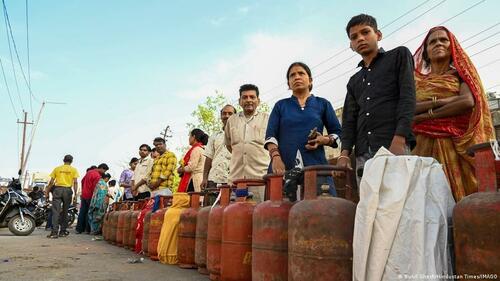
The 2026 Iran conflict, marked by disruption of the Strait of Hormuz and Brent crude surging past $120 per barrel, has exposed deep vulnerabilities in oil-importing economies across South and East Asia. Countries with high energy dependence, thin foreign reserves, elevated foreign-currency debt, and structural trade imbalances—such as India, Thailand, the Philippines, South Korea, and Japan—are experiencing widening current account deficits, currency depreciation of 5-6%, rising inflation, and slowing growth. These pressures follow textbook oil shock transmission: higher import bills erode fiscal buffers, subsidies strain public finances already stretched by post-pandemic debt, and reduced consumer spending plus corporate distress feed non-performing loans.
While mainstream coverage has highlighted near-term GDP losses estimated by the UN at $97-299 billion for Asia-Pacific and Asian Development Bank forecasts of regional growth slowing to 5.1%, deeper connections point to elevated risk of a broader emerging-market crisis. Depreciating currencies amplify dollar-denominated debt burdens at a time when Trump-era tariffs and sanctions have already constrained trade adjustment. Petrochemical shortages ripple into agriculture, semiconductors, and manufacturing, threatening global supply chains. Nomura identifies Thailand, India, Korea, and the Philippines as most exposed due to import reliance, while IMF analysis notes balance-of-payments strains and currency pressures already weighing on several Asian economies.
Mainstream outlets have tended to frame impacts as transitory or manageable through subsidies and drawdowns of reserves, yet history—from the 1997 Asian Financial Crisis referenced by Satyajit Das—suggests limited policy space. Interventions to defend currencies risk depleting reserves further, while devaluation hits low-income groups hardest and can ignite social unrest. Spillover risks are under-appreciated: reduced Asian demand could dampen global commodities, exacerbate European energy vulnerabilities lingering from prior shocks, and transmit inflation worldwide. Chatham House and CNN reporting on UN estimates underscore the potential for millions pushed into poverty, yet systemic contagion via banking, trade, and investment flows receives less attention. Without coordinated regional responses or swift restoration of energy flows, these stresses could evolve into cascading defaults and a drag on global growth that outpaces current consensus forecasts.
LIMINAL: Oil-importing Asia's reserve depletion and dollar debt loads risk a 1997-style contagion wave that mainstream forecasts are underpricing, with spillovers likely amplifying global inflation and supply disruptions into 2027.
Sources (5)
- [1]Satyajit Das: Testing the limits of rearguard economic action(https://www.newindianexpress.com/opinion/2026/May/28/testing-the-limits-of-rearguard-economic-action)
- [2]How the War in the Middle East Is Affecting Energy, Trade, and Finance(https://www.imf.org/en/blogs/articles/2026/03/30/how-the-war-in-the-middle-east-is-affecting-energy-trade-and-finance)
- [3]Economists are putting a price on the Iran war fallout in Asia(https://www.cnn.com/2026/04/14/world/iran-war-asia-economic-losses-intl-hnk)
- [4]Iran War, Oil Price Shock Negative for Oil-Dependent Asia Countries(https://www.nomuraconnects.com/focused-thinking-posts/iran-war-oil-price-shock-negative-for-oil-dependent-asia-countries/)
- [5]How will the Iran war affect the global economy?(https://www.chathamhouse.org/2026/03/how-will-iran-war-affect-global-economy)