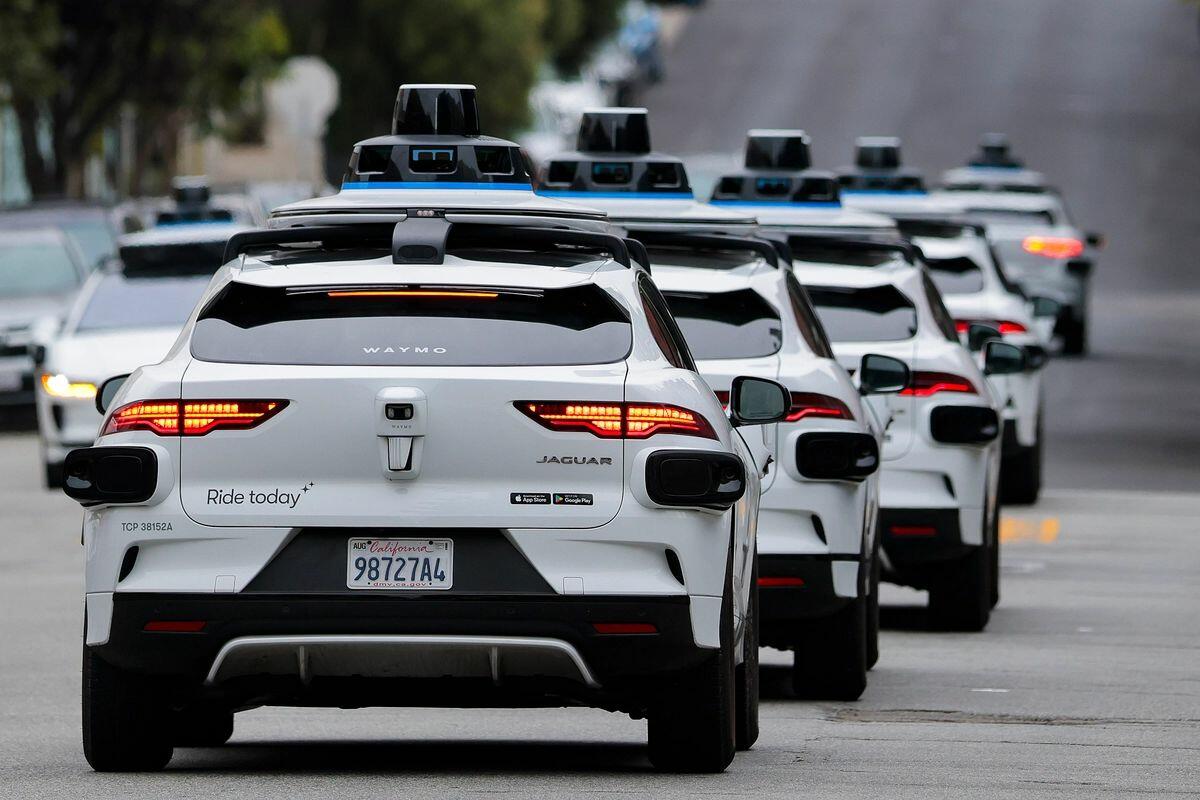
Chinese Universities Study Shows AVs Reduce Own Crashes but Increase Human Tailgating and Cut-Ins
AVs demonstrate lower crash involvement than human drivers in controlled datasets, yet the same conservative kinematics induce measurable risk compensation in nearby human operators. Primary records from the Chinese car-following study and the IIHS Waymo analysis show divergent rear-end outcomes depending on AV fleet type. Policy and algorithm adjustments will decide whether these externalities are mitigated before scaled deployment.
The October paper in Communications Engineering analyzed car-following data and found AVs obey speed limits strictly while producing lower acceleration variance than human drivers. Human followers responded with shorter time gaps, which the authors coded as elevated tailgating risk, and with more frequent cut-ins into the larger gaps AVs leave ahead. These patterns emerged consistently across the datasets examined. The study did not track multi-lane passing or oncoming traffic conflicts on two-lane roads. AV operators gain regulatory credit for lower crash rates, yet the same programming that produces those rates shifts collision exposure onto human drivers whose reaction times remain unchanged. Insurance Institute for Highway Safety July data on Waymo L4 vehicles recorded a 40 percent reduction in being rear-ended relative to human benchmarks, indicating the rear-end dynamic is not uniform across AV fleets. Department of Transportation planning documents treat mixed fleets as the baseline condition through at least the end of the decade. Regulators therefore face a trade-off between documented AV safety gains and unpriced externalities borne by human operators. AV deployment contracts and liability rules will determine whether manufacturers internalize the induced-risk costs or continue to externalize them. Absent changes in gap-acceptance algorithms or enforcement of following-distance rules, the measured human behavioral response is likely to persist at current AV penetration rates.
Waymo: induced tailgating incidents per 1,000 AV miles exceed 0.8 in mixed urban fleets by Q4 2026 absent algorithm revision.
Sources (3)
- [1]Automated vehicles drive safer but induce riskier behavior in human drivers in car-following scenarios(https://www.nature.com/articles/s44172-024-00279-0)
- [2]Insurance Institute for Highway Safety Waymo Crash Study(https://www.iihs.org/topics/bibliography/ref/2263)
- [3]USDOT AV Integration Report September 2024(https://www.transportation.gov/sites/dot.gov/files/2024-09/AV-Integration-Report.pdf)