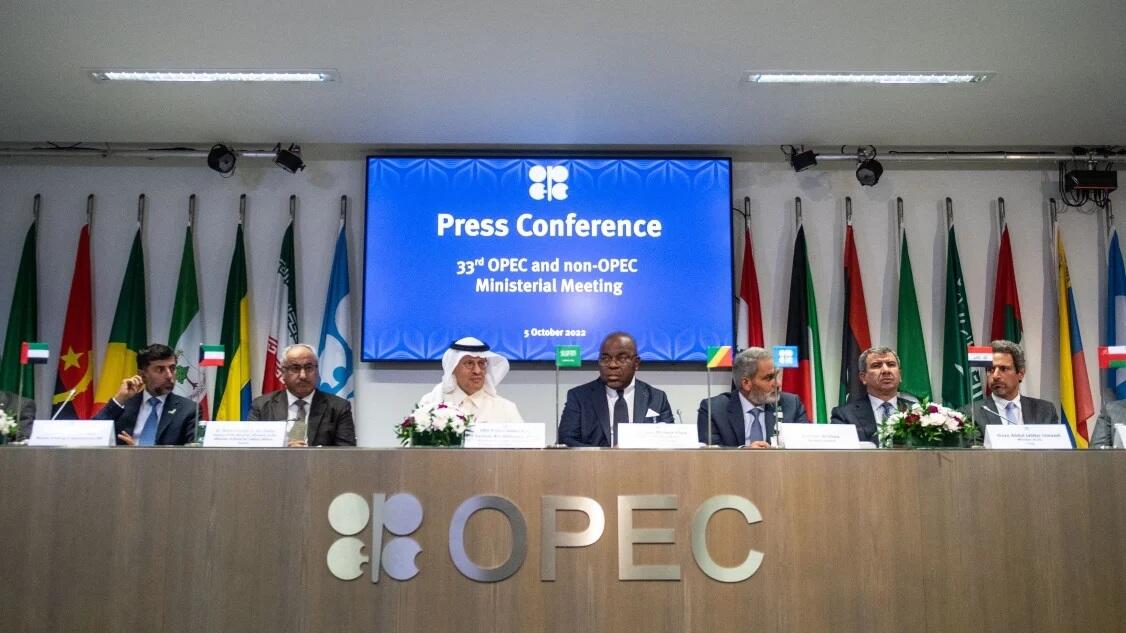
US encouraged Iraq and Venezuela to consider leaving OPEC, Reuters reports; Saudi crown prince intervened on Venezuela
Reuters, citing anonymous sources, reports that Washington privately encouraged Iraq and Venezuela to consider leaving OPEC and blocked Venezuela’s dues, prompting a reported Saudi intervention. Neither country left, and the State Department says high-level talks did not press an exit.
Documented: On 27 November 2026, Reuters published an exclusive, citing ten people familiar with the matter, that the Trump administration earlier in 2026 encouraged Venezuela and Iraq—two of OPEC’s five founding members—to consider leaving the group, and that Washington prevented Venezuela from paying its annual OPEC membership dues. The same account says US officials were pushing for more production and investment in both countries and worried that OPEC limits could later constrain those plans. Two of those people said Saudi Crown Prince Mohammed bin Salman intervened over the summer and persuaded the administration not to press Venezuela’s departure further. In August, Trump said publicly that leaving OPEC was Venezuela’s decision.
Documented, with a narrower source base: Two people told Reuters that Iraqi Prime Minister Ali Faleh al-Zaidi raised the possibility of leaving OPEC at a government meeting this summer after discussions with US officials who encouraged the idea. Iraq’s oil ministry pushed back and steered him toward seeking a higher production quota instead. Neither country has left. Reuters reported no indication that the United States blocked Iraq’s dues. Separately, the UAE announced earlier in 2026 that it would quit OPEC; Reuters said there was no indication the US was involved in that exit or in earlier departures by Angola, Ecuador, and Qatar.
Documented official response: A State Department official told Reuters that Washington reviews disbursement requests from Venezuela’s interim government against approved and prohibited uses of foreign government deposit funds held in a US-controlled account set up after Nicolás Maduro’s removal. The official said it was possible lower-level US officials had raised an OPEC exit with Caracas earlier in the year, but that it “has not been among the issues raised by high-level officials.” On Iraq, the official said conversations “have focused on improving energy infrastructure to increase production and transportation of energy, not OPEC.” The department did not answer whether it had blocked Venezuela’s OPEC fee.
Claimed, and only partly aligned with the public record: The Reuters account is anonymous-source reporting, not a US or Saudi confirmation of the lobbying or of the crown prince’s intervention. In July, during a White House visit, al-Zaidi told reporters Iraq needed a “fair share” inside OPEC and, in contemporaneous Iraqi reporting of those remarks, said Baghdad was not considering withdrawal—while citing reconstruction costs from the fight against Islamic State. That public line is consistent with the oil ministry’s reported preference for a higher quota, not with an announced exit.
Speculated, and not established by the Reuters report: That the episode was a coordinated attempt to break the cartel, that it reveals a “hidden hand” behind ordinary oil-price moves, or that petrodollar arrangements were the operative mechanism. What the sourcing does show is narrower: US financial leverage over Venezuelan state funds after Maduro’s removal, longstanding routing of Iraqi oil revenues through the Federal Reserve Bank of New York, and a private push—denied at high level by the State Department—that did not produce exits. OPEC’s cohesion was already under strain from the UAE’s departure and from quota disputes; the reported US conversations add a diplomatic episode to that strain, not a demonstrated collapse of the dollar-oil system.
Oil buyers and producing states are affected if founding members are being pressed to ignore cartel quotas, because that changes how much crude can reach the market and how much leverage Saudi Arabia still has inside OPEC. What is documented so far is private pressure and a reported Saudi pushback, not an actual exit by Iraq or Venezuela.
Sources (4)
- [1]US pushed Venezuela, Iraq to consider leaving OPEC, sources say(https://www.reuters.com/business/energy/us-pushed-venezuela-iraq-consider-leaving-opec-sources-say-2026-11-27/)
- [2]Iraq needs a fair share within OPEC, says prime minister(https://www.reuters.com/world/middle-east/iraq-needs-fair-share-within-opec-says-prime-minister-2026-07-14/)
- [3]UAE quits Opec in win for Trump as oil cartel weakened(https://www.theguardian.com/business/2026/apr/28/uae-quit-opec-oil-exporters-cartel-donald-trump)
- [4]US pushed Venezuela, Iraq to consider leaving OPEC, sources tell Reuters(https://www.timesofisrael.com/liveblog_entry/us-pushed-venezuela-iraq-to-consider-leaving-opec-sources-tell-reuters/)