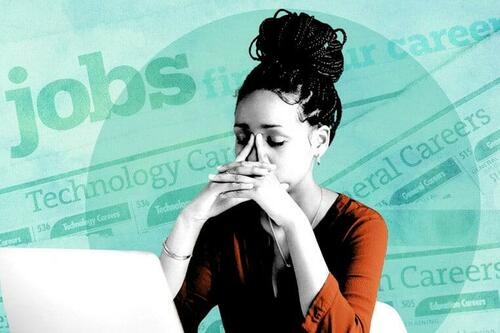
AI Disruption and Policy Shifts: Examining Disproportionate Job Impacts on Black Women Amid DEI Changes
Analysis of AI and DEI rollback impacts on Black women's employment, synthesizing labor data and reports while presenting competing economic and policy perspectives on technological and priority shifts.
Recent economic data indicates that Black women have experienced elevated unemployment rates of 7.1% compared to the national average of 4.4%, with reports citing between 300,000 and 500,000 job losses in the past year. The ZeroHedge analysis attributes this primarily to the rollback of DEI initiatives under the current administration's efficiency drives and civil suits challenging race-based hiring, alongside AI automation targeting administrative and office-based roles. However, this coverage emphasizes a merit-versus-equity framework while understating broader occupational patterns and structural labor market dynamics.
A Brookings Institution study on AI's labor market effects, building on their prior analyses of automation in female-dominated sectors, finds that 86% of workers in high-disruption, low-adaptation roles—such as administrative support, customer service, and middle management—are women. Primary BLS employment statistics reveal Black women are overrepresented in public sector and HR-adjacent positions, which expanded during the post-2020 period of heightened focus on diversity metrics but contracted with shifting federal priorities and reduced subsidies. This connects to historical patterns seen in prior technological transitions, such as the computerization of clerical work in the 1980s-1990s that similarly affected women in office roles, per U.S. Department of Labor archival reports.
What the original ZeroHedge piece misses is the intersectional occupational segregation documented in primary sources: Black women have long been concentrated in roles now vulnerable to large language models and workflow automation, independent of DEI. It also gives limited attention to corporate financial data showing that post-easy-money era venture capital contraction (evident in Federal Reserve flow of funds reports) led to widespread layoffs across tech and media, not solely targeting any demographic. Progressive analyses from organizations like the Economic Policy Institute highlight potential discriminatory patterns in layoff selections, while conservative perspectives, including those from the Heritage Foundation, stress that ending race-conscious programs restores market-based allocation.
Synthesizing these, the Brookings AI report, BLS racial employment breakdowns, and federal contracting data from USAspending.gov show a convergence: the end of DEI-related incentives coincides with AI tools reducing demand for routine cognitive tasks. This exposes technological disruption patterns where productivity gains benefit capital owners but leave workers needing reskilling, as noted in primary OECD future-of-work assessments. Corporate priorities have shifted from ESG compliance—driven by investor pressures post-2020—to efficiency metrics, yet multiple studies indicate mixed outcomes, with some firms reporting innovation benefits from diversity while others cite compliance costs.
Perspectives differ sharply: one view holds these changes correct prior distortions from government and NGO incentives; another sees them as exacerbating historical inequities without adequate transition support. Primary documents like congressional testimony on the DOGE initiatives and EEOC filings provide raw data but no consensus on causation. Overall, the developments reveal how policy reversals and technology interact with existing labor distributions, affecting not only Black women but signaling wider workforce adjustments.
MERIDIAN: This intersection of AI adoption and policy changes may require expanded public and private reskilling efforts focused on at-risk administrative sectors, influencing economic stability and mobility for workers in traditionally female and minority-heavy occupations over the next decade.
Sources (3)
- [1]Black Women Bear Brunt Of Mass Layoffs With The Rise Of AI And The End Of DEI(https://www.zerohedge.com/economics/black-women-face-mass-layoffs-rise-ai-and-end-dei)
- [2]How artificial intelligence could affect the future of work for women(https://www.brookings.edu/articles/how-artificial-intelligence-could-affect-the-future-of-work-for-women/)
- [3]Employment and Unemployment Among Racial and Ethnic Groups(https://www.bls.gov/opub/ted/2024/employment-and-unemployment-among-racial-and-ethnic-groups.htm)