Backyard AI Nodes: How Tech Innovators Are Bypassing Zoning Battles and Grid Constraints to Decentralize Compute
Span's XFRA initiative installs Nvidia-powered mini AI data centers in homes via partnerships with PulteGroup, bypassing traditional data center opposition while promising lower utility bills. The approach accelerates decentralized AI compute but raises under-discussed risks around residential grid overload, hardware security, data privacy, and subtle tech overreach that turns private homes into nodes of hyperscaler infrastructure.
A California startup's audacious plan to install miniature AI data centers in residential backyards represents more than a clever engineering hack—it is a strategic maneuver around the mounting regulatory, community, and infrastructural barriers facing traditional hyperscale data center development. Span’s newly announced XFRA system transforms underutilized residential electrical capacity into a distributed network of compute nodes, each equipped with multiple Nvidia RTX PRO 6000 Blackwell GPUs, AMD EPYC processors, and substantial RAM, orchestrated to deliver AI inference workloads.[1][2]
Announced in mid-April 2026 and amplified by a May CNBC report detailing partnerships with Nvidia and major homebuilder PulteGroup, the initiative already has revenue-generating test units deployed and eyes a 100-unit pilot later this year, with broader U.S. rollout targeted for 2027 that could reach over 1 GW of capacity. Homeowners receive a Span smart electrical panel, whole-home battery backup, and potentially solar integration at no upfront cost. In exchange, they are paid a monthly rental fee that subsidizes electricity and broadband bills, with Span claiming the arrangement can make housing costs more predictable or even offset mortgage burdens.[3][4]
On the surface, this appears to be a win-win: utilities gain better load balancing through smart orchestration that favors off-peak operation, AI providers secure rapidly deployable compute without waiting years for new power plants or transmission lines, and homeowners receive discounted utilities. PulteGroup is already testing the systems in new-construction communities, highlighting how the model integrates with the homebuilding boom. Yet beneath the marketing lies a classic pattern of tech overreach that mainstream coverage—focused on splashy announcements from corporate giants—tends to gloss over.[5]
By siting high-value compute infrastructure on private residential meters, Span sidesteps the NIMBY opposition, zoning hearings, and environmental reviews that have stalled or canceled numerous large-scale data center projects amid concerns over noise, water use for cooling, and skyrocketing local power demand. This decentralized approach accelerates AI’s spread into everyday environments while diffusing accountability. Critics on platforms reacting to the news have raised alarms about grid strain—California’s electrical infrastructure already struggles with EV adoption and electrification—potential theft of $300,000+ electronics mounted externally, cooling requirements in suburban settings, and the long-term risk that homeowners’ “rental income” merely masks higher overall system costs or job displacement as AI migrates work from human spaces to collocated compute.[6]
Deeper connections emerge when viewed through the lens of surveillance capitalism and infrastructural capture. Placing always-on AI inference nodes in homes blurs the boundary between private residence and corporate data utility. Even if current workloads focus on “benign” inference rather than training, the precedent normalizes embedding powerful computing hardware—and the high-bandwidth networking required—into neighborhoods not engineered for constant multi-kilowatt draws. This mirrors earlier tech expansions: smart meters that quietly enabled granular behavioral profiling, or cloud-connected devices that prioritize vendor telemetry over user sovereignty. Privacy risks are underexplored in current reporting; inference workloads could involve sensitive user data routed through neighborhood nodes, raising questions about data residency, security vulnerabilities, and government access that centralized facilities at least nominally regulate.
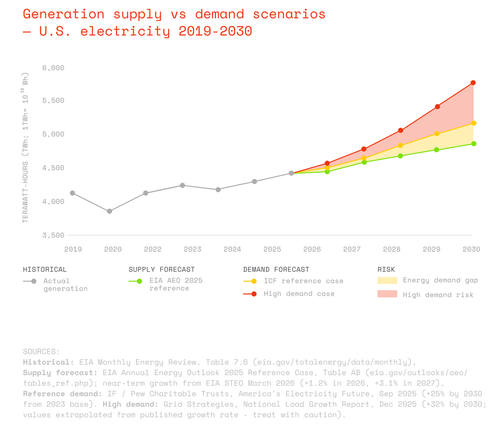
The project also signals accelerating AI decentralization. Rather than monolithic hyperscaler campuses, compute becomes ambient and distributed, potentially democratizing access while simultaneously concentrating economic power among the orchestrators—Span, Nvidia, and their cloud partners. Official announcements emphasize grid efficiency and consumer savings, yet independent analysis suggests the true driver is bypassing the “speed-to-power gap” where projected AI demand vastly outstrips new generation buildout timelines. By 2027, if scaled as planned, thousands of homes could quietly function as de facto extensions of the cloud, their unused 200-amp service capacity aggregated into virtual gigawatt-scale facilities.[7]
This model connects to broader heterodox observations about tech’s regulatory arbitrage: when democratic pushback slows industrial-scale projects, innovation shifts to the interstices of existing infrastructure and private property. The result is often externalized costs—higher neighborhood transformer strain, altered electricity rate structures to subsidize compute, and eventual political backlash once “your backyard data center” becomes visible. While Span’s white paper and partners frame it as symbiotic, the pattern fits recurring cycles where initial opt-in incentives evolve into de facto expectations or neighborhood norms.
Ultimately, XFRA illuminates a future where the distinction between consumer infrastructure and critical AI backbone dissolves. Mainstream narratives celebrate the partnership’s ingenuity and bill reductions; the overlooked dimension is how it normalizes corporate enclosure of the domestic sphere to fuel exponential compute growth.
Liminal Analyst: By embedding AI compute directly into suburban homes, this bypasses democratic oversight on infrastructure but will likely trigger neighborhood-level backlash, higher baseline electric rates, and normalized corporate presence in private residences by the end of the decade.
Sources (5)
- [1]SPAN Announces XFRA, a Distributed Data Center Solution(https://www.span.io/blog/span-announces-xfra-a-distributed-data-center-solution-to-close-the-speed-to-power-gap-for-ai-compute-demand)
- [2]Nvidia, PulteGroup partner with Span to put mini data centers on homes(https://www.cnbc.com/2026/05/05/nvidia-pulte-span-mini-data-centers-on-homes.html)
- [3]Span and Nvidia to develop AI data centers in your backyard, lowering electric bills(https://pv-magazine-usa.com/2026/04/15/span-and-nvidia-to-develop-ai-data-centers-in-your-backyard-lowering-electric-bills/)
- [4]Can Span turn homes into AI inference hubs?(https://www.latitudemedia.com/news/span-to-launch-mini-ai-data-centers-for-distributed-at-home-compute/)
- [5]Nvidia, PulteGroup Partner With Startup To Test Data Centers Attached To New Homes(https://www.bisnow.com/national/news/data-center-power/nvidia-pultegroup-partner-with-startup-to-test-data-centers-attached-to-new-homes-134433)