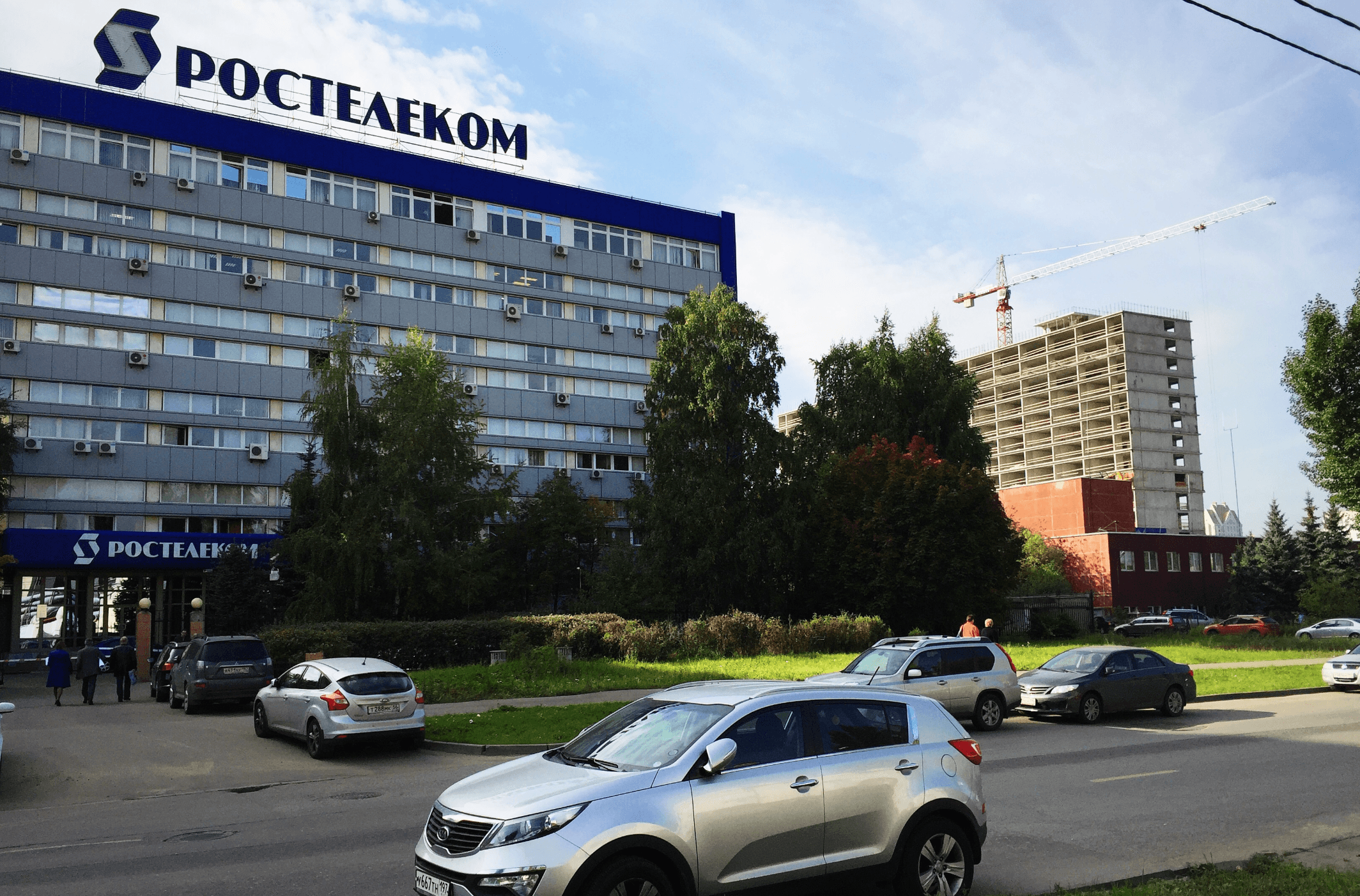
Rostelecom DDoS Reveals Runet's Fragility in Escalating Reciprocal Cyber Warfare
The Rostelecom DDoS attack exposes single points of failure in Russia's centralized Runet architecture and fits a clear pattern of reciprocal disruptive cyber operations between Russia and Ukraine, revealing that sovereign-internet efforts have increased rather than reduced systemic fragility.
The Monday evening distributed denial-of-service attack on Rostelecom, Russia's dominant state-linked telecom operator, temporarily severed internet access for users in roughly 30 cities. Online banking platforms, the Gosuslugi government portal, Rutube, Steam, and card-payment systems went dark. Rostelecom described the outage as a byproduct of its own emergency traffic filtering, claiming the assault was "quickly contained." While technically accurate on the surface, this framing misses the larger story.
This incident is the latest data point in a sustained pattern of reciprocal disruptive cyberattacks between Russia and Ukraine-aligned actors that has intensified since early 2022. Pro-Ukrainian groups, including the IT Army and various hacktivist collectives, have repeatedly used DDoS as an asymmetric tool to impose economic and psychological costs on Russian civilian infrastructure. These operations mirror, albeit at lower intensity, Moscow's own campaigns against Ukrainian energy grids, telecom nodes, and financial systems using wiper malware and kinetic strikes on cell towers.
The original coverage correctly notes Russia's accelerating "sovereign internet" (Runet) project, complete with mandatory deep packet inspection, domestic routing mandates, and whitelisting regimes. What it underplays is how this centralization has created single points of failure. Rostelecom functions as a de facto backbone provider; when it buckles, the much-vaunted ability to isolate Runet from the global internet offers little protection to ordinary citizens and businesses. Last week's separate outage hitting Sberbank and payment systems—variously blamed on internal failure or clumsy filtering—likely belongs to the same causal chain. Russian authorities' reflexive instinct to attribute disruptions to "foreign cyberattacks" or "maintenance" reveals an emerging pattern: repeated failures to acknowledge systemic brittleness.
Independent monitoring from NetBlocks and analyses published by the Atlantic Council’s Digital Forensic Research Lab document at least a dozen comparable waves of DDoS targeting Russian government and financial infrastructure in 2023-2024 alone. A 2023 Carnegie Endowment report on digital authoritarianism further highlights how Russia's regulatory drive toward digital sovereignty has paradoxically increased vulnerability by concentrating control in fewer, state-aligned entities. Adversaries do not need sophisticated zero-days; volumetric attacks exploiting this centralization suffice to generate nationwide ripple effects.
The strategic implication is clear: in peer-level cyber conflict, disruptive rather than destructive attacks have become the preferred currency. Both sides avoid crossing into physical infrastructure destruction that could trigger escalation ladders, yet each continues to erode adversary resilience and public confidence. For the Kremlin, these episodes undermine the narrative of technological self-sufficiency. For Ukraine and its proxies, they impose cumulative economic drag without requiring scarce conventional munitions.
Western governments should treat this as instructive. Over-reliance on a handful of critical providers, whether state-owned or private, creates analogous attack surfaces. The Rostelecom case demonstrates that even nations investing billions in "cyber sovereignty" remain exposed when infrastructure design prioritizes control over distributed resilience. As hybrid conflict normalizes, the distinction between peacetime harassment and wartime infrastructure warfare continues to blur.
SENTINEL: Russia will likely accelerate Runet isolation measures and internal network segmentation after the Rostelecom breach, yet continued centralization around state champions creates persistent targets; expect reciprocal DDoS campaigns to intensify through 2025 as both sides prioritize disruption over destruction.
Sources (3)
- [1]Cyberattack on telecom giant Rostelecom disrupts internet services across Russia(https://therecord.media/rostelecom-cyberattack-disrupts-russian-internet-access)
- [2]Russian Cyber Operations in the Ukraine War - Atlantic Council(https://www.atlanticcouncil.org/in-depth-research-reports/report/russia-s-cyber-operations/)
- [3]Digital Authoritarianism and the Future of Human Rights - Carnegie Endowment(https://carnegieendowment.org/2023/10/02/digital-authoritarianism-and-future-of-human-rights-pub-90654)