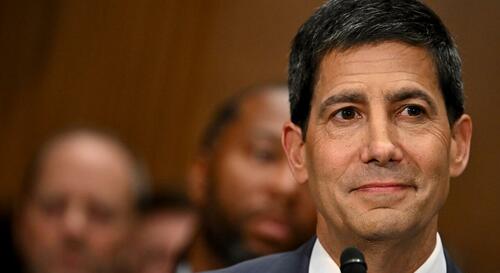
Kevin Warsh’s Fed Chair Approval: A Turning Point for U.S. Monetary Policy Amid Political Divides
Kevin Warsh’s approval as Fed Chair by a Senate committee along party lines signals a potential shift in U.S. monetary policy amid political tensions. This analysis explores overlooked risks to Fed independence, market stability, and public trust, drawing on historical context and economic data to highlight uncertainties in Warsh’s proposed ‘regime change.’
The Senate Banking Committee's approval of Kevin Warsh as President Donald Trump’s pick for Federal Reserve Chair, in a strictly partisan 13-11 vote on [date], signals not only a potential shift in U.S. monetary policy but also a deepening politicization of the central bank’s role. Warsh, a former Fed governor and vocal critic of post-COVID monetary policies, has promised a 'regime change' at the Fed, focusing on shrinking the central bank’s $6.7 trillion balance sheet, rethinking inflation frameworks, and reducing transparency in policy communication. While the original coverage by ZeroHedge highlights the party-line vote and Democratic concerns over Trump’s influence, it misses critical historical context, potential market impacts, and the broader implications of Warsh’s opaque policy proposals.
Warsh’s nomination comes at a time of heightened economic uncertainty, with inflation lingering above the Fed’s 2% target (3.2% as of November 2023 per the Bureau of Labor Statistics) and fears of stagflation—a term invoked by Senator Elizabeth Warren during the vote. Historically, Fed chairs have faced political pressure, but Trump’s explicit expectation of immediate rate cuts, as expressed in a CNBC interview on April 21, 2023, recalls the Nixon-era interference that led to inflationary spirals in the 1970s. The original source underplays this parallel, focusing instead on immediate political drama rather than long-term risks of eroded Fed independence. Warsh’s commitment to independence, while stated, remains untested against a backdrop of Trump’s public demands—raising questions about whether monetary policy will prioritize political appeasement over economic stability.
Beyond politics, Warsh’s proposed balance sheet reduction could have profound effects on bond yields and market stability, a dimension glossed over in initial reports. The Fed’s quantitative tightening since 2022 has already unsettled markets, with the 10-year Treasury yield spiking to 4.8% in October 2023 (per Federal Reserve Economic Data). A more aggressive unwind under Warsh could exacerbate volatility, particularly for sectors like housing and tech that rely on low borrowing costs. His lack of specificity on inflation frameworks also introduces uncertainty—will he pivot from the current 2% target to a more flexible average inflation targeting, or adopt a harder line that risks tipping the economy into recession? These unanswered questions, absent from the ZeroHedge piece, are critical for stakeholders.
Warsh’s personal wealth, estimated by Bloomberg at potentially over $2.5 billion alongside his wife Jane Lauder, adds another layer of scrutiny not fully explored in the original coverage. While Democrats have raised ethical concerns about conflicts of interest, the deeper issue is whether his background as a Wall Street insider—having served on Morgan Stanley’s board—aligns him more with financial elites than with the average American struggling under inflation. This perception could undermine public trust in the Fed at a time when confidence is already fragile, as evidenced by Gallup polls showing trust in U.S. institutions at historic lows (26% in 2023).
Synthesizing insights from multiple sources, including the Federal Reserve’s own statements on balance sheet policy and historical analyses of Fed independence, it’s clear that Warsh’s tenure could mark a pivot toward a less predictable, potentially more politically influenced central bank. The Bank for International Settlements’ 2022 report on central bank autonomy warns that political encroachment often leads to short-term policy wins at the cost of long-term credibility—a risk Warsh must navigate. Whether he can balance Trump’s demands with economic pragmatism remains an open question, one that initial coverage has failed to frame within the broader geopolitical and economic landscape.
MERIDIAN: Warsh’s tenure may lead to heightened market volatility if balance sheet reductions accelerate, especially without clear inflation targets. Political pressure from Trump could further complicate his ability to maintain Fed independence.
Sources (3)
- [1]Fed Chair Pick Warsh Approved By Key Senate Committee Along Party Lines(https://www.zerohedge.com/markets/fed-chair-pick-warsh-approved-key-senate-committee-along-party-lines)
- [2]Federal Reserve Economic Data - 10-Year Treasury Yield(https://fred.stlouisfed.org/series/DGS10)
- [3]Bank for International Settlements - Central Bank Independence Report 2022(https://www.bis.org/publ/arpdf/ar2022e3.htm)