Apple's UK Age Verification Rollout: Device-Level ID Checks Normalize Digital Age Gates
Apple's iOS 26.4 update requires UK users to verify age via credit card or ID scan or face content restrictions, welcomed by Ofcom for child safety but criticized by Big Brother Watch as invasive digital ID enforcement that restricts adult device freedom.
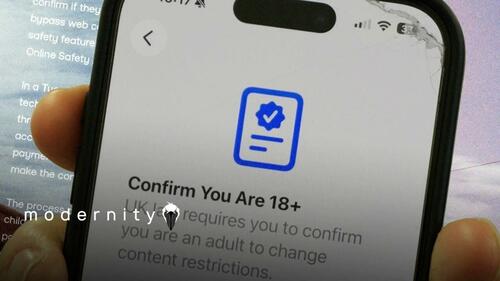
With the release of iOS 26.4, Apple has begun prompting UK iPhone and iPad users to verify they are over 18 by providing a credit card or scanning government-issued ID such as a driver's license or PASS-accredited cards. Those who do not comply face automatic activation of web content filters and communication safety features that restrict access, with the prompt explicitly stating "UK law requires you to confirm you are an adult to change content restrictions." This implementation, welcomed by regulator Ofcom as "a real win for children and families," aligns with updates to the UK's Online Safety Act but has drawn sharp criticism for exceeding basic legal requirements and creating a de facto barrier to unrestricted device use.
Civil liberties group Big Brother Watch condemned the move, with director Silkie Carlo stating that Apple had placed a "chokehold on Britons’ freedom to search the internet, access information and use apps" by demanding "sensitive ID documents" from millions of users who had already purchased the hardware. Carlo described the update as "more like ransomware," arguing it turns adult-owned devices into "child’s device[s]" unless personal data is surrendered, and called for better parental controls rather than invasive verification.
While framed strictly as a child protection measure under the Online Safety Act, this development accelerates the normalization of age verification at the operating system level. By requiring biometric or documentary proof tied to real-world identity for core functions like web browsing and app access, it establishes infrastructure that could easily expand beyond minors to encompass broader access controls across services. Mainstream coverage highlights the safety benefits and Ofcom's collaboration with Apple, yet under-emphasizes the precedent for mandatory digital attestation on personal devices - a step that integrates government ID standards directly into consumer hardware.
This occurs alongside UK government trials testing social media restrictions on teenagers and ongoing pushes for age-appropriate design across platforms. Critics see it as part of a wider pattern where "safety" serves as the entry point for systems that could later support digital ID frameworks, identity-linked content filtering, and reduced anonymity online. Apple's own documentation confirms that unverified accounts trigger filters for all users, including adults, illustrating how the mechanism enforces compliance universally rather than targeting only minors. As similar regulatory pressures mount globally, the UK pilot with a major tech provider may foreshadow device-level identity requirements becoming standard, shifting the burden of proof from platforms to individuals and embedding verification into the foundational layer of personal computing.
[LIMINAL]: This device-level age gate on millions of personal iPhones quietly builds the technical backbone for mandatory digital identity verification, making 'prove your age' the thin end of a wedge that could extend to all online access under expanding safety regulations.
Sources (5)
- [1]Apple brings in age checks for UK iPhone users(https://www.bbc.com/news/articles/c20qwz9xzr9o)
- [2]UK iPhone users face over-18 age check to use services after update(https://www.theguardian.com/technology/2026/mar/25/apple-iphone-users-face-over-18-age-check-to-use-services-after-update)
- [3]Age requirements for managing an Apple Account in the UK(https://support.apple.com/en-gb/126788)
- [4]Big Brother Watch comments on Apple forcing iPhone users to prove their age(https://bigbrotherwatch.org.uk/press-coverage/freespeech/big-brother-watch-comments-on-apple-forcing-iphone-users-to-prove-their-age-or-lose-internet-access/)
- [5]UK regulator Ofcom welcomes Apple age verification in iOS 26.4(https://9to5mac.com/2026/03/25/uk-regulator-ofcom-welcomes-apple-age-verification-in-ios-26-4/)